How to Polish Stainless Steel Without Scratching It


Short answer: polish stainless steel by working with the grain, never across it. Stainless has a directional brushed finish, and the single thing that makes polished stainless look wrong is working in circles, which cuts across that grain and leaves visible swirls under kitchen lighting. Find the grain direction first, clean the surface, then work a non-abrasive polish along the grain in straight overlapping passes and buff off with a clean microfiber.
The second thing worth knowing before you start: most orange spotting on stainless steel is not the stainless failing. It is contamination sitting on the surface, and it comes off.
Find the grain before you touch it
Look at the panel in raking light, from a low angle rather than straight on. You will see fine parallel lines running in one direction. That is the grain, put there when the steel was brushed at the factory.
On most appliances the grain runs horizontally across the door. On sinks it usually follows the length of the basin. On range hoods and splashbacks it can run either way, and on some appliances it changes direction between the door and the handle, so check each panel separately rather than assuming.
Every pass you make should run parallel to those lines. Work across them and you will leave marks that catch light from every angle, which is exactly the swirled look people are trying to get rid of.
Why stainless steel gets rust spots
Stainless resists rust because chromium in the alloy reacts with oxygen to form a thin, invisible, self-repairing chromium oxide layer. Damage it and it reforms, provided oxygen can reach the surface.
When stainless does show orange marks, it is usually one of three things.
Contamination, which is by far the most common. Tiny particles of ordinary steel have embedded in the surface and are rusting there. The stainless underneath is perfectly sound. Sources include steel wool, a wire brush, grinding sparks from nearby work, cast iron cookware left wet on a drainer, and a rusting fixing bolt above the panel. Polishing removes the particles and the staining with them.
Chloride attack. Salt breaks through the protective layer. Common on coastal properties, boat hardware, and anything exposed to road salt. It leaves pitting as well as staining.
Heat damage. Around cooktops, grills and exhausts, sustained high temperature can compromise the chromium layer and leave a straw or blue tint. That colour is a change in the metal itself and may not fully polish out.
In the first two cases polish removes the visible rust and lets the protective layer re-establish itself, which is why stainless sinks and appliance doors clean up so well.
What you need
- Warm water, dish soap, a soft cloth
- A non-abrasive metal polish
- Three or four clean microfiber towels
- A soft brush for seams and around handles
- Cleaner Gloss if there is baked-on grease, which is common on range hoods and around cooktops
What to keep away from it
Steel wool and wire brushes. These are the leading cause of the rust spotting people then try to remove. They scratch the finish and leave steel particles embedded in it. The spots that appear a fortnight later are those particles rusting.
Chlorine bleach. Chloride is precisely what breaks down the protective layer. Bleach on stainless causes pitting that does not polish out.
Abrasive cream cleansers. They cut the brushed finish unevenly and leave patches that catch light differently to the surrounding panel.
Abrasive metal polishes. Grit-based polish removes fine scratches by creating finer ones. On a directional brushed finish that shows.
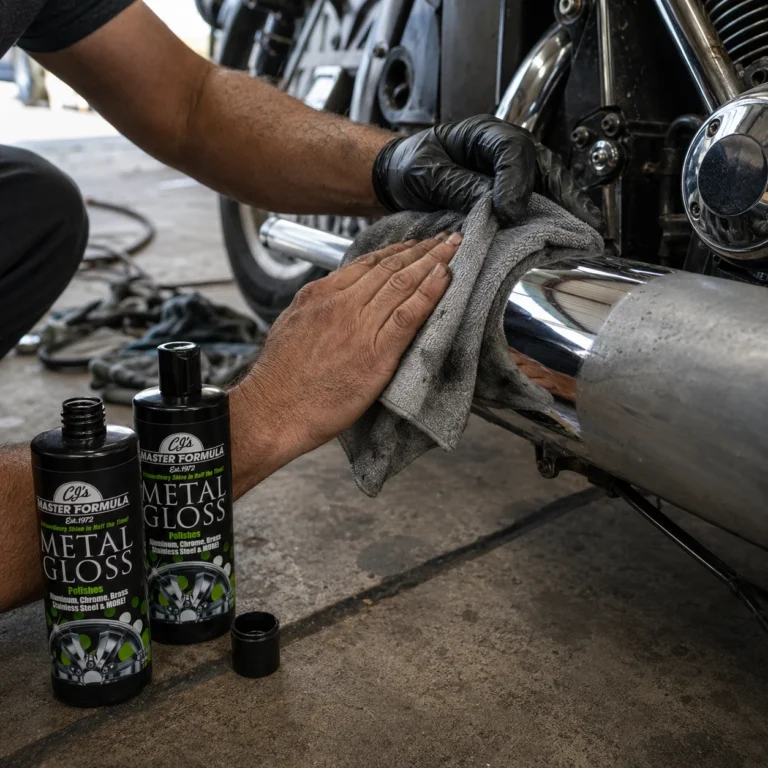
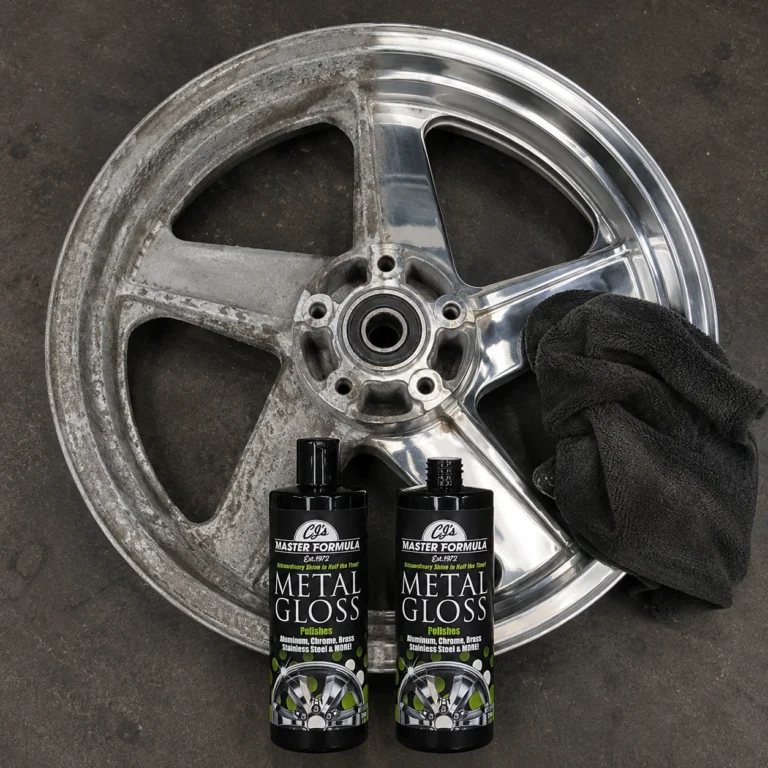
Metal Gloss uses a jewelers’ rouge formulation rather than abrasive grit, so it lifts oxidation, tarnish and contamination without cutting into the surface or disturbing the brushed grain.
Step by step
- Clean first, with the grain. Warm soapy water and a soft cloth. Get grease off before polishing, because polishing over grease just spreads it around.
- Deal with baked-on residue separately. Around cooktops and hoods, cooking oil polymerises into a hard film that soap will not shift. Use Cleaner Gloss first.
- Dry completely. Water left in a seam will run out mid-polish and streak the finished area.
- Apply a small amount to the cloth, not to the panel. Fold the cloth so you have a flat working face.
- Work along the grain in straight passes. Overlap each pass slightly. Firm pressure, but let the product do the work.
- Do one panel at a time. A fridge door, then the freezer door, then the handles. Finishing a panel completely gives an even result.
- Watch the cloth. It will darken as oxidation and contamination transfer off. On a badly stained sink it can go quite black, which is the job working.
- Buff with a clean dry microfiber, still along the grain, until the surface is even and clear.
- Repeat on stubborn areas. Rust staining sometimes takes two passes.
Surface by surface
Fridge and dishwasher doors
The most visible stainless in most homes and the most prone to fingerprints. Grain is usually horizontal. Handles often have a different grain direction to the door, so treat them separately. Once polished, fingerprints wipe off far more easily, which is the practical benefit people notice most.
Sinks
Sinks take the worst of it: hard water deposits, tea staining, and rust rings from cast iron pans or steel tins left standing. All three respond well. Work along the length of the basin. Pay attention to the area around the drain flange where deposits build up.
Cooktops and range hoods
Heat plus cooking oil is the difficult combination. Clean thoroughly first, then polish. Straw or blue heat tinting around burners may not come out completely, because that is a change in the metal rather than a deposit on it. Set expectations accordingly.
Barbecues and outdoor kitchens
Outdoor stainless is often a lower grade than indoor appliance steel and rusts more readily, particularly near the coast. It responds well to polish and benefits enormously from sealing afterwards.
Boat hardware
Rails, cleats, stanchions and fittings. Rinse with fresh water first, always, because polishing salt crystals into a rail scratches it. Marine stainless usually needs more passes than domestic because the staining is deeper. Sealing afterwards matters more here than anywhere else.
Elevator panels and door furniture
Commercial stainless in high-traffic areas takes fingerprints and scuffing constantly. Polishing and then sealing dramatically reduces how often it needs attention.
Sealing, and why it is worth the extra ten minutes
Freshly polished stainless is clean, bare and receptive to everything that lands on it. Applying Sealer Gloss leaves a barrier that repels water and fingerprints and slows the return of staining.
On a kitchen sink this is the difference between water spotting every day and wiping it dry once a week. On outdoor or marine stainless it is the difference between polishing twice a year and polishing every few weeks.
Mistakes worth avoiding
- Working in circles. The most common error and the most visible.
- Using the same cloth throughout. Once loaded with residue it stops lifting and starts smearing.
- Polishing over grease. Clean first, always.
- Leaving cast iron on a stainless drainer. The single most common cause of rust rings in a kitchen.
- Assuming rust means the stainless has failed. Usually it is contamination sitting on top, and it comes off.
Frequently asked questions
How do you polish stainless steel without scratching it?
Work with the grain rather than in circles, clean the surface thoroughly first so no grit is dragged across it, use a non-abrasive polish, and change to a fresh microfiber cloth as soon as one loads up with residue. Those four things prevent nearly all self-inflicted scratching.
Why does my stainless steel have rust spots?
Usually contamination rather than the stainless itself failing. Tiny particles of ordinary steel from steel wool, wire brushes, grinding sparks or cast iron cookware embed in the surface and rust in place. Polishing removes the particles and the staining together.
Can I use steel wool on stainless steel?
No. It scratches the brushed finish and leaves steel particles behind that rust, creating the orange spotting people then try to remove. It is one of the most common causes of the problem it is used to fix.
Which direction should I polish stainless steel?
Along the grain, which is the direction of the fine parallel lines visible in raking light. On most appliance doors it runs horizontally, and on sinks it usually follows the length of the basin. Check each panel separately, since handles often differ from doors.
Will polish remove scratches from stainless steel?
It removes light surface scratches and greatly reduces fine swirl marks. Deeper scratches that have cut through the brushed finish cannot be polished out, and evening those out means refinishing the grain across the whole panel.
Is bleach safe on stainless steel?
No. Chlorine attacks the chromium oxide layer that gives stainless its corrosion resistance, and it can cause pitting that no polish will remove. Use soap and water, then a non-abrasive polish.
How often should stainless steel be polished?
Every two to three months keeps kitchen stainless looking sharp. Sealing afterwards extends that considerably, and outdoor or marine stainless needs more frequent attention because of salt exposure.
Can I use the same polish on my sink and my car?
Yes. The same formula works on stainless steel, chrome, aluminum, brass, silver and gold, which is why one bottle covers kitchen appliances and vehicle trim alike.
Getting started
Find the grain, clean first, work in straight lines, and seal when you finish. Most stainless that looks permanently stained is carrying contamination rather than damage.
If you are working through a kitchen and a vehicle, the Metal Gloss 2-Pack saves 10% over two singles, and most people go through the first bottle faster than they expect once they start noticing every stainless surface in the house.