Will Metal Polish Remove Rust? What It Can and Cannot Do

Short answer: metal polish removes light surface rust, along with oxidation, tarnish and water spots. It will not remove deep rust, pitting or structural corrosion. The dividing line is whether the rust sits on top of the metal or has eaten into it. If a fingernail catches on the rough patch, polish alone will not fix it, and you need a dedicated rust remover first.
This question comes up more than any other, and the honest answer has two halves. Getting it right saves people from either giving up on metal that would have cleaned up easily, or spending an afternoon polishing something that was never going to respond.
Surface rust versus deep rust
Rust is iron oxide. It forms when iron or steel meets moisture and oxygen, and unlike the oxide layer on aluminum, it does not protect the metal underneath. It keeps going.
The practical distinction is how far it has gone.
Surface rust
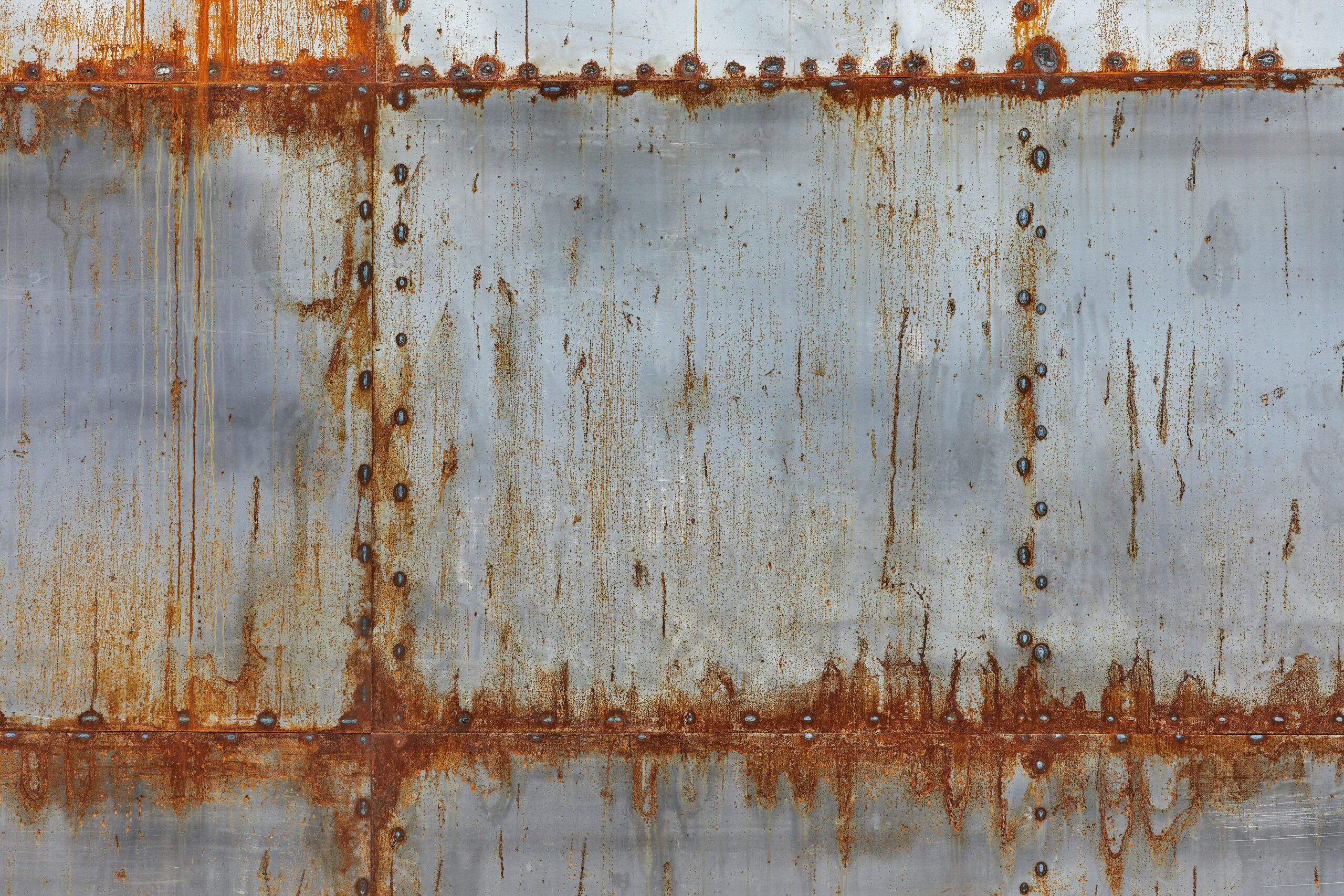
Light orange or brown discolouration sitting on top of otherwise sound metal. The surface still feels smooth, or close to it. This is common on chrome that has been left wet, on stainless steel that has picked up contamination from another metal, and on tools stored in a damp garage.
Surface rust is a layer. Layers come off, and this is exactly what polish is for.
Deep rust and pitting
Rough, flaking, or crater-like. The metal has been eaten into and material is physically missing. Run a fingernail across it: if it catches, the rust has depth.
No polish can fix this, because polishing removes a layer and pitting is the absence of a layer. You cannot polish a hole flat.
The quick test
Put a small amount of polish on a cloth and work a hidden section for thirty seconds.
- Cloth turns orange or brown, surface brightens: surface rust, and it is coming off. Keep going.
- Cloth barely marks, surface stays rough: the rust has depth. Stop and use a rust remover first.
That thirty seconds saves a lot of guesswork.
What polish actually removes
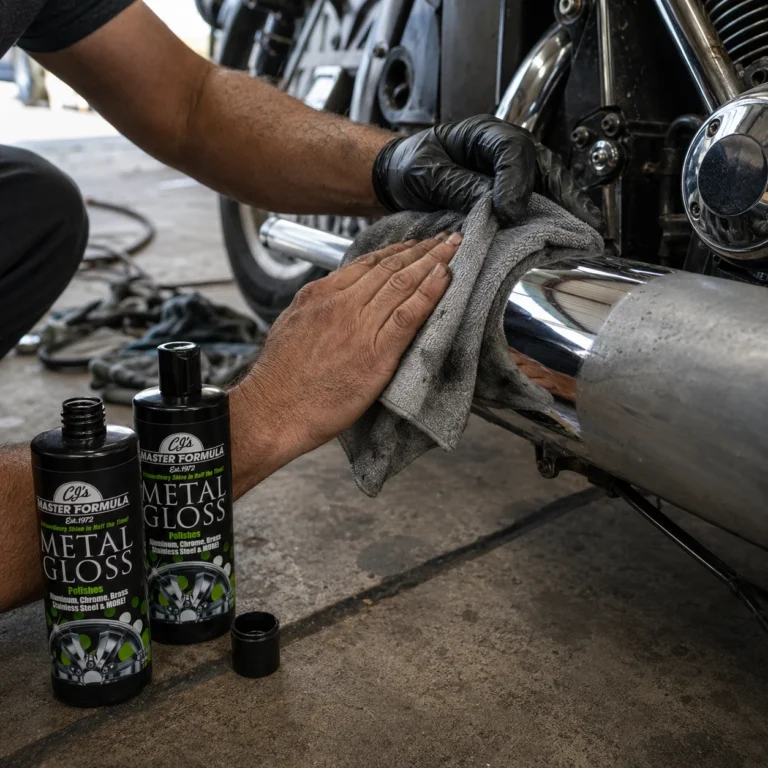
CJ’s Metal Gloss handles:
- Light surface rust on chrome, steel and stainless
- Oxidation, the dull grey chalk on aluminum
- Tarnish, the darkening on brass, silver and copper
- Water spots and hard water mineral deposits
- Light surface scratches and fine swirl marks
- The cloudy haze that builds on metal nobody has touched in a while
It does this without abrasive grit. The formula is based on jewelers’ rouge, the same class of compound used to finish precious metals, so it lifts the layer rather than cutting into the metal below. On thin chrome plating especially, that difference matters, because there is not much plating to spare.
What to do about deep rust
If the test above tells you the rust has depth, the sequence is:
1. Remove the rust chemically
Use a dedicated rust remover or converter. These work chemically on the iron oxide rather than mechanically. Follow the product’s instructions on dwell time, and rinse thoroughly afterwards, because residue left behind will interfere with everything you do next.
2. Assess what is left
Once the rust is gone you will see the true condition. Sound metal with staining is a good outcome. Visible pitting means material is missing and no product will restore it, though polishing will still improve how it looks.
3. Polish
Now Metal Gloss does its job. It removes remaining staining, brings back brightness, and evens out the surface appearance.
4. Seal immediately
This step is not optional on metal that has already rusted once. Bare steel that has been stripped of rust will start rusting again the moment it meets humidity, and it will do it faster than before because the surface is now more receptive.
Sealer Gloss puts a barrier between the metal and the air, holding for up to six months depending on conditions. On previously rusted metal this is what stops you doing the whole job again in spring.
What about rust on aluminum?
Aluminum does not rust. There is no iron in it, so iron oxide cannot form.
What people call rust on aluminum is either oxidation, the grey chalky layer aluminum forms naturally, or galvanic corrosion, a white powdery deposit that appears where aluminum sits against a dissimilar metal like steel.
Both respond to polish. Oxidation comes off readily, and light galvanic corrosion cleans up well, though the underlying cause needs addressing or it will return at the same spot.
Stainless steel and the rust that should not be there
Stainless steel is supposed to resist rust, and mostly it does, thanks to a chromium oxide layer that reforms when damaged.
When stainless does show orange spotting, it is usually one of:
- Contamination. Steel particles from grinding, steel wool or nearby rusting components have embedded in the surface and are rusting there. The stainless itself is fine. Polish removes the particles and the staining.
- Chloride attack. Salt water or heavy road salt has broken through the protective layer. Common on boat hardware and winter vehicles.
- Heat damage. Around exhausts, high temperatures can compromise the chromium layer.
In all three cases polish removes the visible rust and helps the protective layer re-establish. This is why stainless boat rails and appliance panels clean up so well.
Realistic expectations by surface
- Chrome bumper with light rust spotting: excellent results. Spots lift, shine returns.
- Chrome with pitting: partial. Surrounding chrome cleans up, staining around pits lifts, pits remain.
- Stainless sink with orange marks: excellent. Usually contamination, not the steel failing.
- Tools with a light film of rust: excellent, and worth sealing afterwards.
- Structural steel with flaking rust: not a polishing job. Mechanical removal, then treatment, then paint.
- Exhaust with heat discolouration and rust: mixed. Rust lifts, heat bluing may not, because that is a change in the metal itself.
Stopping it coming back
Rust needs moisture and oxygen. You cannot remove the oxygen, so the entire strategy is moisture control.
- Seal after polishing. The single most effective step.
- Dry after washing. Water sitting in seams is where rust starts.
- Wash off salt promptly. Road salt and sea air are the two fastest routes to rust.
- Store dry. A cover on a damp vehicle traps moisture and makes matters worse, so make sure it is dry first.
- Polish every two to three months. Catching a light film is far easier than removing established rust.
Frequently asked questions
Does metal polish remove rust?
It removes light surface rust. Metal polish lifts rust that sits on top of otherwise sound metal, along with oxidation, tarnish and water spots. It cannot remove deep rust or pitting.
How do I know if my rust is too deep to polish?
Run a fingernail over it. If the surface feels smooth or only slightly rough, polish should handle it. If your nail catches on craters or flaking, the rust has depth and needs a chemical rust remover first.
Should I use a rust remover or a polish?
Both, in order, if the rust is deep. Rust remover works chemically to dissolve heavy corrosion. Polish then removes remaining staining and restores the shine.
Will polishing rust damage my chrome?
Not with a non-abrasive polish. Abrasive compounds cut into chrome plating, which is thin to begin with. A jewelers’ rouge formulation lifts rust and tarnish without removing plating.
Why does my stainless steel have rust spots?
Usually contamination rather than the stainless failing. Steel particles from tools, steel wool or nearby components embed in the surface and rust in place.
Can rust come back after polishing?
Yes, and quickly, if the metal is left unsealed. Freshly polished metal is bare and exposed. Applying a sealant afterwards is what makes the result last.
Does metal polish work on rusted tools?
Yes, on light surface rust. Clean the tool, polish the rust off, then seal or oil it before storing to stop it returning.
The bottom line
Polish is the right tool for rust that sits on the surface, and the wrong tool for rust that has eaten in. Thirty seconds with a cloth tells you which one you have.
For anything you have already had to de-rust once, polish and seal together. The bundles pair Metal Gloss with Sealer Gloss at 10% off, which covers both halves of the job.
For stainless steel specifically, see how to polish stainless steel without scratching it.