Metal Polish vs Metal Cleaner: What Is the Difference?

Short answer: a metal cleaner removes what is sitting on top of the metal, such as dirt, grease, road film and brake dust. A metal polish removes what has happened to the metal itself, such as oxidation, tarnish, water spots and light surface rust, and leaves a shine behind. Cleaner comes first, polish comes second. On lightly soiled metal you can skip straight to polish. On anything neglected, cleaning first makes the polishing faster and safer.
People often buy one when they needed the other, then conclude the product does not work. The difference is simple once you see it.
What a metal cleaner does
A cleaner works on contamination: substances that have landed on the metal and stuck there.
- Road film and traffic grime
- Brake dust baked onto wheels
- Grease, oil and fingerprints
- Old wax or sealant residue
- Salt deposits
None of that is the metal. It is a layer of foreign material on top, and a cleaner lifts it chemically so it can be wiped away. Afterwards, the metal is clean but it is not necessarily bright. If the metal underneath was dull and oxidized, cleaning reveals clean dull metal.
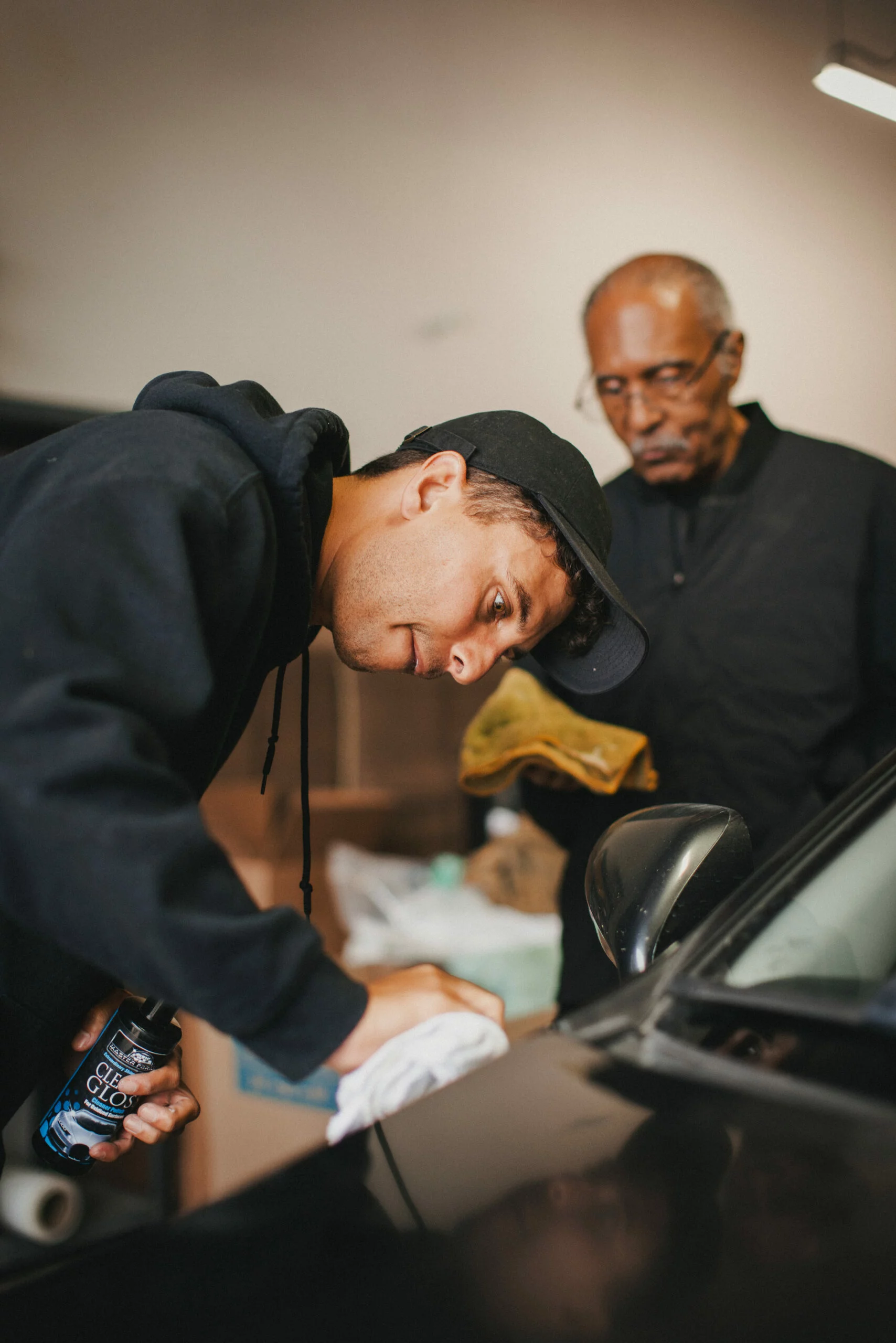
Cleaner Gloss is our pre-polish step for exactly this: neglected wheels, exhaust tips and anything that has not been touched in a season or more.
What a metal polish does
A polish works on the metal’s own surface condition.
- Oxidation, the grey chalky layer on aluminum
- Tarnish, the darkening on brass, silver and copper
- Light surface rust on steel and chrome
- Water spots and mineral deposits
- Light surface scratches and fine swirls
These are not deposits sitting on the metal. They are changes to the metal surface itself, and removing them means taking off that altered layer to expose bright metal underneath.
That is why polishing produces shine and cleaning does not. Polishing exposes fresh metal. Cleaning exposes whatever was already there.
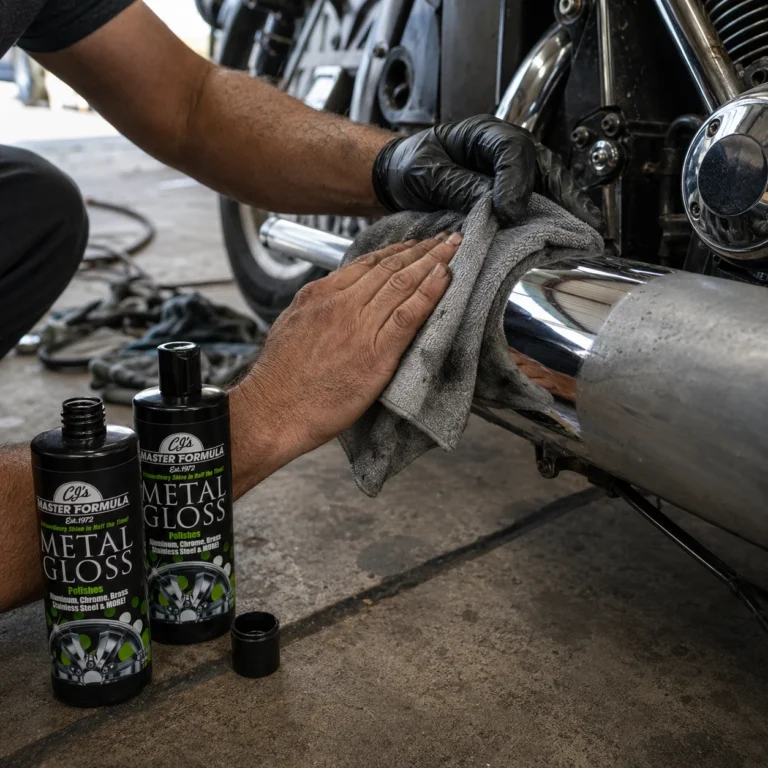
CJ’s Metal Gloss does this with a jewelers’ rouge formulation rather than abrasive grit, so it lifts the layer without cutting into the metal underneath. That matters most on thin chrome plating and soft aluminum, where abrasive compounds leave fine scratches behind.
Side by side
| Metal cleaner | Metal polish | |
|---|---|---|
| Removes | Dirt, grease, brake dust, road film | Oxidation, tarnish, light rust, water spots |
| Works on | What is on the metal | The metal surface itself |
| Leaves a shine | No, leaves it clean | Yes |
| When to use | First, on neglected metal | Second, or alone on lightly soiled metal |
| Effort | Wipe on, wipe off | Firm overlapping passes |
| Cloth turns black | Dirty grey or brown | Black, from the oxide layer |
Which do you need?
Wash the item with soap and water, dry it, then look.
Still visibly dirty, greasy, or rough to the touch: you need a cleaner first. A wash has not shifted bonded contamination, and polishing over it means grinding it into the surface.
Clean but dull, grey, darkened or spotted: you need polish. That is surface condition, not dirt.
Both, which is most vehicles: clean first, then polish.
Why polishing dirty metal is a bad idea
This is the practical reason the order matters, not just an upsell.
Brake dust and road grit are hard particles. Working polish over them with firm pressure drags those particles across the surface, and on soft aluminum or thin chrome plating that is how scratches appear. Nearly every complaint about a polish scratching traces back to polishing over an inadequately cleaned surface.
Cleaning first is not an extra step so much as insurance.
Using them together
- Wash with soap and water. Rinse and dry fully.
- Clean with Cleaner Gloss if the surface is still contaminated. Wipe on, work it in, wipe off.
- Polish with Metal Gloss. Small sections, firm overlapping passes, buff off with a fresh microfiber.
- Seal with Sealer Gloss. Freshly polished metal is bare and exposed, and sealing holds the finish for up to six months.
On a first restoration of a neglected vehicle you will use all four steps. On maintenance every two to three months after that, you will usually go straight from wash to polish.
Where each one earns its place
Cleaner earns its place on
- Wheels with baked-on brake dust
- Exhaust tips with carbon deposits
- Anything that has sat outside untouched for a year or more
- Metal being prepared for sealing, where any residue would compromise adhesion
Polish earns its place on
- Chrome that has gone dull or spotted
- Aluminum that has turned grey and chalky
- Brass and silver that have darkened
- Stainless sinks and appliances with water marks
- Any metal where you want a mirror finish rather than merely a clean one
What about all-in-one products?
Some products claim to clean and polish in one pass. They generally compromise on both, because effective cleaning and effective polishing want different chemistry.
There is a more specific problem on soft metals. An all-in-one that cleans aggressively enough to shift baked brake dust is usually doing it with abrasives, and abrasives on soft aluminum or thin chrome cause the scratching that people then try to polish out.
Two products used in the right order do a better job than one product trying to do both, and the second step is quick once the first has done its work.
Frequently asked questions
What is the difference between metal cleaner and metal polish?
A metal cleaner removes contamination sitting on top of the metal, like dirt, grease and brake dust. A metal polish removes changes to the metal surface itself, like oxidation, tarnish and light rust, and produces shine. Cleaner is used first, polish second.
Do I need both?
On neglected metal, yes. On regularly maintained metal, a wash followed by polish is usually enough. The test is whether the surface still feels rough or looks dirty after washing.
Can I use polish without cleaning first?
If the metal is only lightly soiled and a wash has left it smooth to the touch, yes. If bonded contamination remains, polishing over it risks dragging hard particles across the surface and scratching it.
Which one removes oxidation?
Polish. Oxidation is a change to the metal itself, not a deposit on top of it, so a cleaner will not touch it.
Does polish clean as well?
Partly. Polishing removes light soiling as it works, which is why lightly dirty metal can go straight to polish. It is not a substitute for cleaning heavy brake dust or baked-on grime.
What order do cleaner, polish and sealer go in?
Wash, clean, polish, seal. Each step prepares the surface for the next, and sealing last is what makes the work last.
Is a metal cleaner the same as a combined cleaner and polish?
No. Combination products attempt both jobs and typically use abrasives to achieve the cleaning half, which is the thing to avoid on soft aluminum and thin chrome plating.
Putting it together
Cleaner removes what is on the metal. Polish removes what has happened to the metal. Sealer stops it happening again.
If you are restoring something that has been left a while, our bundles group these steps together at 10% off buying separately, so you have the whole sequence in one go rather than discovering halfway through that you are missing a step.
For the polishing step in detail, see how to polish chrome.